
Trustpilot
“Het was snel, duidelijk en precies zoals gevraagd werd.”
Review in Dutch
Custom and replacement parts
A clip inside an appliance, a bracket in a machine, a knob on equipment older than its supplier's spare-parts list. When the original cannot be bought, a printed part is often the shortest route back to a working machine — provided the requirements and the rights are settled first.
Often, yes — for parts whose function, load and environment are understood, and where reproduction is permitted. What decides it is not whether the shape can be printed, but whether a printed version can carry what the original carried, in the place the original sat.
3D print estimate
Choose what you want printed. The form then asks for the details relevant to that route.
Estimate, not a quote · shipping €10 and packaging €7 included, except with pickup or free delivery within the municipality of Groningen (temporary offer) · confirmed after assessment
From
€163.87
incl. 21% VAT · €135.43 excl. VAT
Filament only: €0.63 · 25 g × €25/kg
Breakdown lines exclude VAT. The final price follows assessment of the file or image, geometry, tolerances, failed-print risk, material availability and application. Electrical components are agreed per construction. Certification and safety-critical parts are outside this estimate.
Discuss your idea or partWhat the part has to survive
A part is not defined by its outline. These four demands push the material route in different directions, and they need to be assessed for the intended use.
| Demand on the part | What it decides | Consequence |
|---|---|---|
| Purely visual or fit check | Appearance and dimensions | Agree dimensions, appearance and the purpose of the trial |
| Clips, snaps or flexes | Layer direction and toughness | Material and orientation matter more than price |
| Heat, chemicals or UV | Environment, not just load | Route narrows sharply; some cases fall outside printing |
| Carries load or torque | Direction of force | Requirements confirmed in writing before production |
From the workshop
An enclosure with clips and pass-throughs, and a folding stand that existed as a model first. Both were made here.

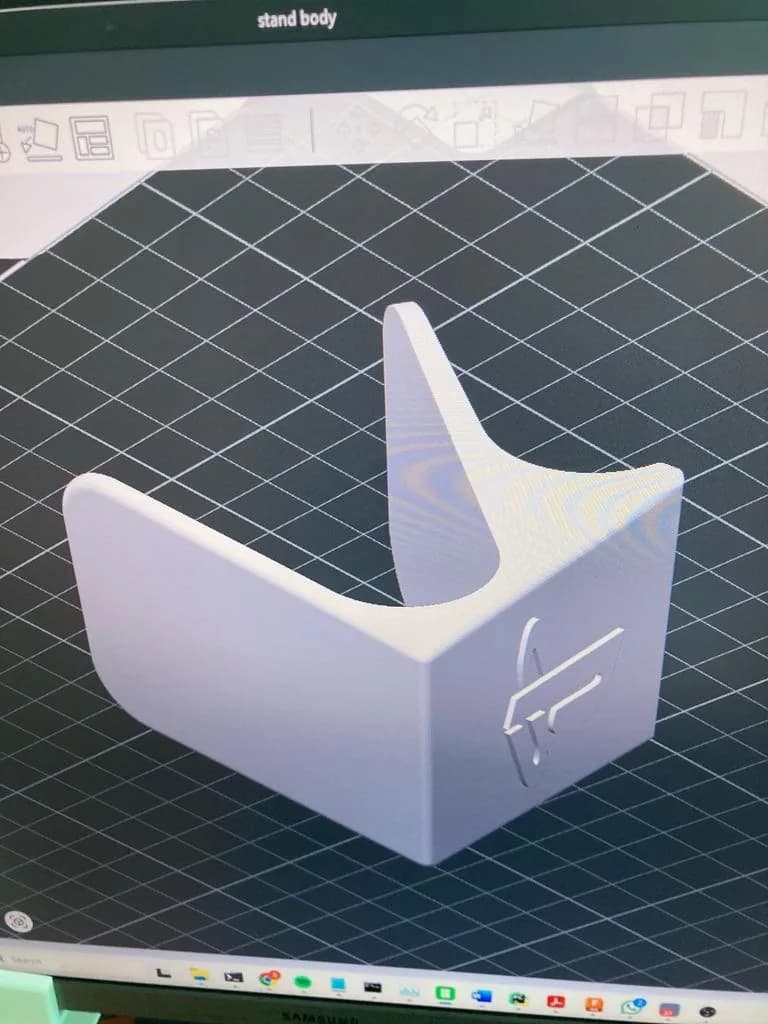
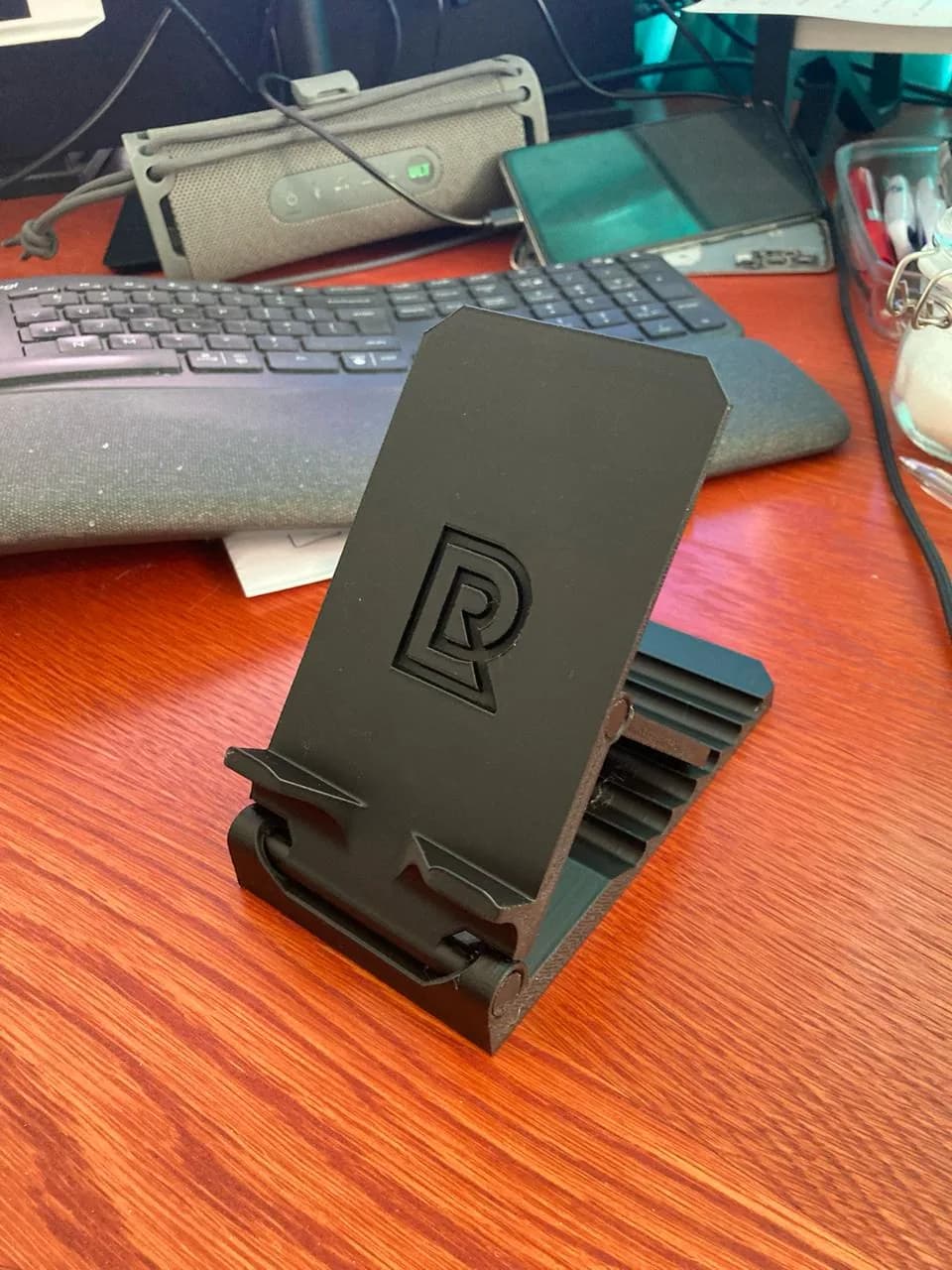
Customer review on Trustpilot
“Het was snel, duidelijk en precies zoals gevraagd werd.”
Review in Dutch
Specify whether the part slides, clamps or can be removed again. Measure the counterpart and identify intact references rather than copying wear. A first print checks the agreed connection; a correct outside shape is not proof of function or safety.
Bring the part itself, photographs with a scale reference, or dimensions from a caliper. If the original is broken into pieces, that is usually still workable — a fracture surface hides less than people expect, and the mating part often supplies the dimensions the broken one lost.
Record where and how the original failed, including wear, damage and the mating part. Repeated breakage is a reason to investigate load, geometry and environment, not proof of one cause. Changes to wall thickness, fillets or orientation are proposed explicitly and checked in a new revision.
Copying a part someone else designed is a legal question first. Before a reconstructed component is produced we establish what is being reproduced and on what basis. Where a right is unclear, that is stated rather than quietly worked around.
Not every part replaces something. Enclosures for electronics, mounting brackets, jigs, fixtures and gauges are among the clearest wins in printing, because they are needed once or a few times, they are specific to your situation, and no supplier stocks them at all.
Assess the first part before ordering repeats. Keep the approved model revision, material and colour, mating dimensions and agreed checks together. List quantities per variant; a changed hole, material or attachment may require another trial rather than an unchanged repeat.
Yes, when function, load, environment and reproduction rights are clear. The shape is rarely the hard part; matching what the original had to withstand is.
Start an enquiry with the part, photographs or dimensions and what it belongs to. We assess whether printing is the right route before quoting it.
Yes. Measuring or 3D scanning reconstructs the geometry, and the mating parts often supply the dimensions a worn or broken original has lost.
Usually. Pieces that still fit together carry most of the geometry, and the surrounding assembly supplies the rest.
Small cracks can sometimes be bonded, but a part that broke under normal use will usually break again in the same place. Reprinting with a different orientation, wall thickness or material addresses the cause instead of the symptom.
Printing a part for your own repair is generally a different question from reproducing and selling a protected design. Rights are assessed per job before production. This is general information, not legal advice.
Not automatically, and not in every direction — printed parts are anisotropic, so orientation is part of the design. Where strength matters, the requirement is recorded and the route is chosen to meet it.
Describe what the part has to do, what you already have, how many you need and when. Only uncertain geometry uses the technical review.